15 December, 2025
What is AC Coupled in Solar Systems
Adding Backup Power to Grid-Tied Solar Systems
Grid-tied solar systems are typically the most economical, efficient, and easiest to install solution. However, many users are surprised to discover during a power outage that even with solar panels on the roof, their home still has no electricity.
This is not a system failure but a consequence of grid regulations and safety standards. In most countries, according to UL, IEEE, and other grid interconnection and safety standards, grid-tied inverters must immediately shut down during a utility outage to prevent backfeeding electricity into the grid, ensuring the safety of utility personnel.
As a result, the solar system is forced to shut down, leaving homes or commercial loads completely without power, often relying on noisy and expensive diesel generators or other emergency solutions.
In fact, there is no need to rebuild or replace existing solar inverters to add reliable backup power to an existing grid-tied system.
AC Coupling technology is a widely adopted, mature solution designed to address this issue.
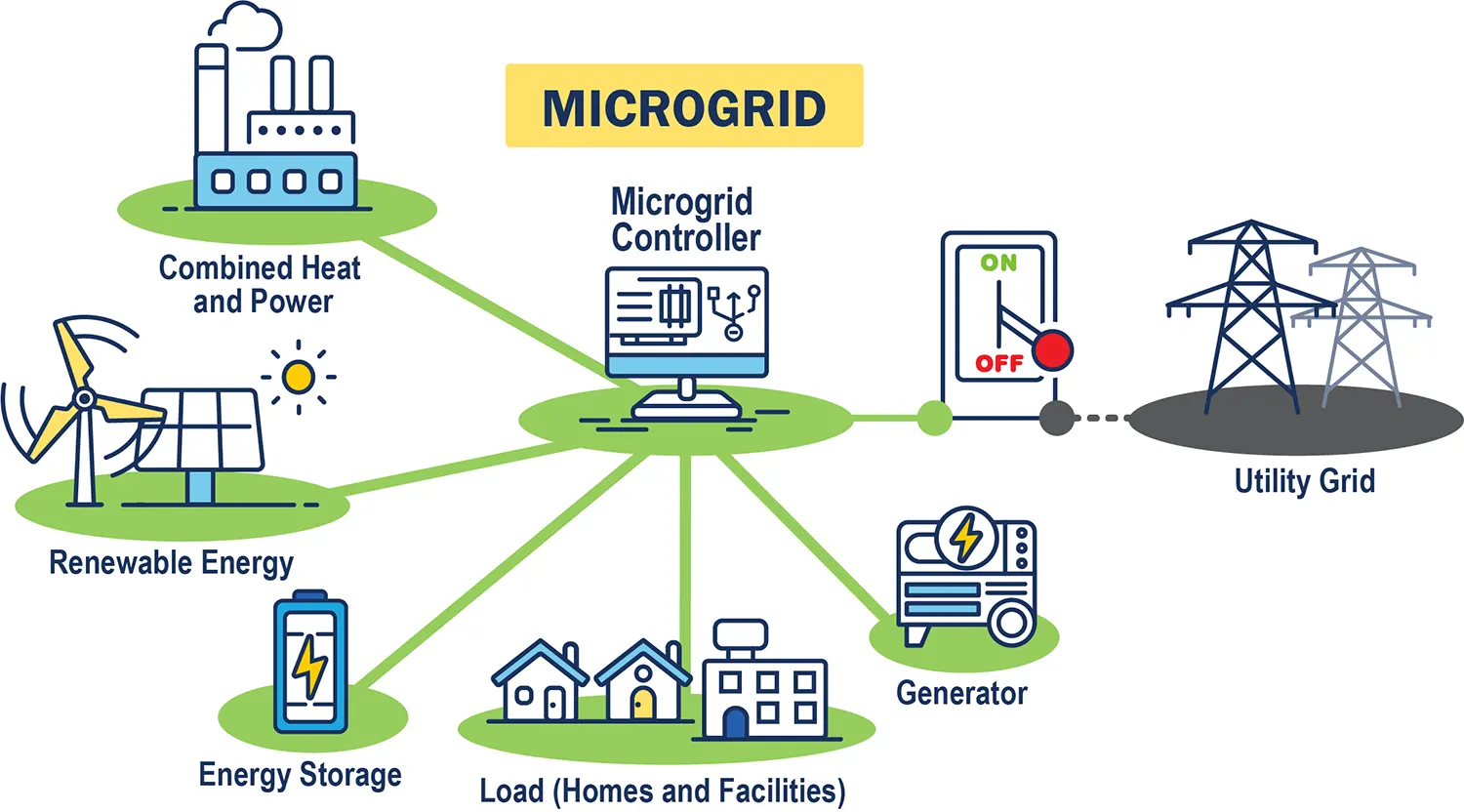
By adding an energy storage inverter and battery system on the AC side, an AC Coupled architecture can form a self-sufficient microgrid during outages, continuously powering critical loads while preserving the investment in the existing solar system.
What is AC Coupled
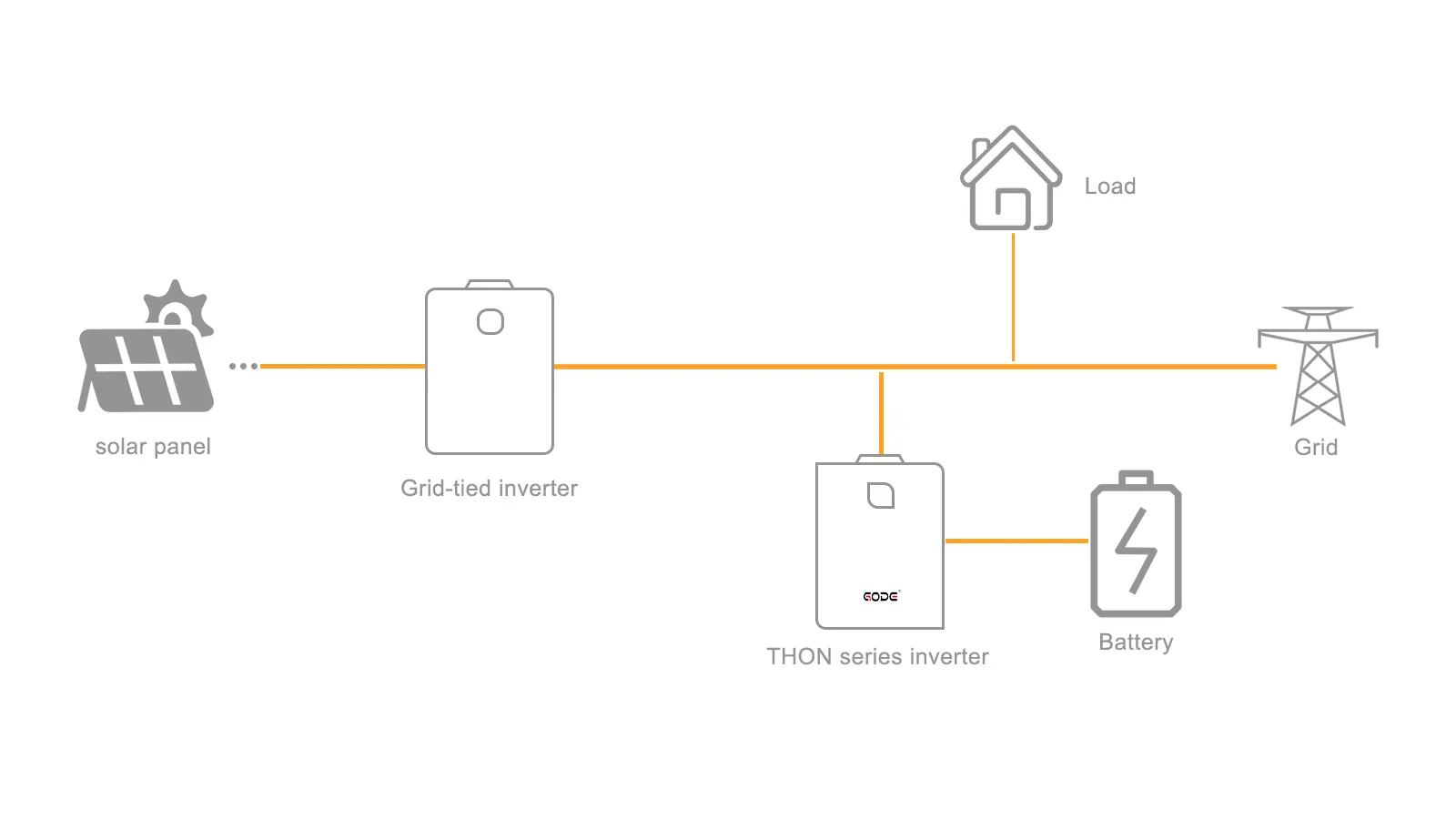
In an AC Coupled architecture, the solar inverter and storage inverter are connected to the same AC bus. DC power generated by the solar panels is first converted to AC by the standalone solar inverter, prioritized to supply local loads, with any surplus exported to the grid.
When the system needs to charge the battery, AC power from the bus is rectified to DC by the storage inverter and stored in the battery. During discharge, the battery’s DC power is inverted back to AC to supply loads or feed the grid.
From an energy flow perspective:
Charging:
Solar Panels (DC) → Solar Inverter (DC→AC) → Storage Inverter (AC→DC) → Battery (DC)
Discharging:
Battery (DC) → Storage Inverter (DC→AC) → Loads / Grid (AC)
The key point is that in an AC Coupled system, charging the battery from solar energy involves two energy conversions: DC→AC→DC.
Advantages of AC Coupled Systems
Retrofit-Friendly
AC Coupling has become the mainstream approach for adding energy storage to existing grid-tied solar systems. For already installed and functioning solar systems, there is no need to replace the existing inverter. Simply connecting a storage inverter and battery on the AC distribution side enables energy storage and backup power.
Numerous international studies, such as NREL’s analysis on distributed energy storage, indicate that AC Coupling is the most feasible and mature approach for retrofitting storage onto existing grid-tied solar systems.
Flexible Expansion
In an AC Coupled architecture, the solar system and storage system operate independently and can be expanded within their respective capacities. This modular design aligns well with the investment strategy of commercial and industrial users: install solar first, add storage later, and expand gradually.
Enhanced Microgrid and Backup Capability
With grid-forming capable storage inverters, AC Coupled systems can form an independent microgrid during grid outages, providing stable voltage and frequency support to maintain uninterrupted supply for critical loads.
Greater Component Flexibility
Users can choose different brands of solar inverters, storage inverters, and batteries, as long as they meet local grid and safety standards, avoiding vendor lock-in.
Mature Technology
AC power systems form the foundation of global electricity networks. AC Coupled architectures more easily comply with grid operator standards for protection, metering, and control, facilitating long-term operation and maintenance.
Limitations of AC Coupled Systems
Lower Efficiency
Converting DC to AC inherently introduces some energy loss, lowering overall efficiency. This occurs when solar power charges the battery, when the battery discharges to loads, or when power is fed to the grid.
Higher Costs
AC Coupled systems typically require standalone solar and storage inverters, along with battery systems and AC-side protection and control devices. Compared to highly integrated DC Coupled solutions, the increased number of power conversion devices raises upfront hardware and installation costs.
Larger Footprint
Because AC Coupled architectures use multiple independent devices, their physical footprint is typically larger than DC Coupled systems. Additional storage inverters, battery cabinets, and associated AC distribution and protection equipment require extra wall, floor, or room space.
AC Coupled vs DC Coupled
In practice, there is no absolute “better” between AC and DC Coupling; they represent two different system design approaches.
The table below compares the two architectures across energy paths, key equipment, system efficiency, costs, expandability, and operation during grid outages, helping readers make informed choices based on their project requirements.
| Feature | DC Coupled | AC Coupled |
| Core Path | Solar DC power charges the battery directly or via DC-DC conversion | Solar AC power must be rectified to DC to charge the battery |
| Number of Conversions | 1 conversion (higher efficiency) | 2 conversions (lower efficiency) |
| Key Equipment | Hybrid inverter / charge controller (integrates PV input, battery management, and inverter functions) | Standalone solar inverter + storage inverter / bidirectional converter |
| System Efficiency (Charging) | Typically higher (especially when solar charges battery directly) | Typically lower (due to additional conversion loss) |
| Cost (New System) | Possibly lower (single integrated device, saving on wiring and installation) | Typically higher (requires two separate inverters) |
| Compatibility & Retrofit | Difficult to retrofit existing PV system (usually requires replacing original inverter) | Easier to retrofit existing PV system (only need to add storage inverter and battery in parallel on AC side) |
| Control Complexity | Relatively simple and centralized (one device manages all functions) | Relatively complex (requires coordination between solar inverter and storage inverter) |
| Expansion Flexibility | Usually limited by hybrid inverter capacity and battery interface | More flexible, allows independent expansion of PV or storage capacity on the AC side |
| Operation During Grid Outage | Hybrid inverter must have specific features to form a microgrid | Storage inverter usually comes with microgrid-forming capability, easier to implement |
| Safety Risk | High DC-side voltage, slightly higher arc risk, requires stricter protection | AC side is standard mains voltage, relatively lower risk |
How to Choose the Appropriate Coupling Scheme
New Solar + Storage Systems
If cost and efficiency are the primary considerations, and future expandability is limited, DC Coupling is usually the preferred choice.
If significant future expansion of solar or storage is anticipated, or seamless operation during grid outages is critical, AC Coupling may offer more flexibility.
In actual new residential solar + storage projects, highly integrated hybrid inverters have become a common solution.
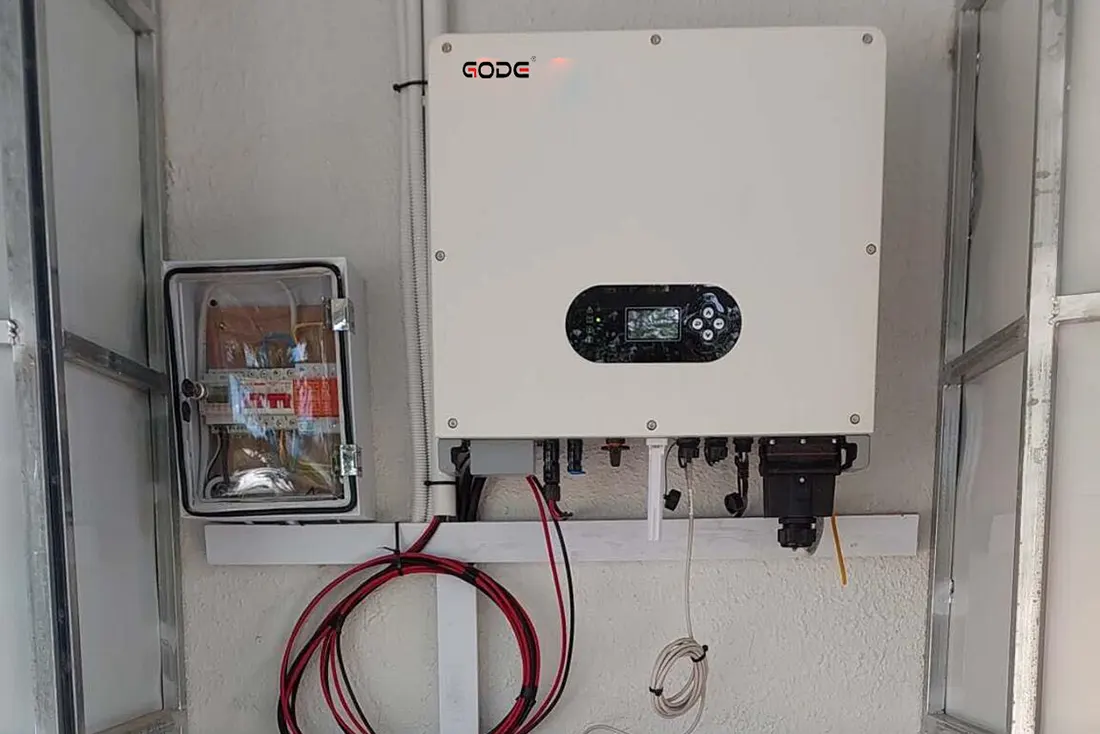
The GODE’s THON hybrid inverter integrates solar input, battery management, and inverter functions within a single device, supporting both grid-tied operation and backup power from the system’s outset.
For new solar systems, the THON hybrid inverter combines the efficiency and compactness advantages of DC Coupling with AC-side grid-forming capability, enabling rapid transition to off-grid mode during outages. Paired with a battery, it can supply critical residential loads continuously without requiring an additional storage inverter.

Adding Storage to Existing Solar Systems
AC Coupling is almost always the most convenient and cost-effective option for retrofitting storage, avoiding the need to replace fully operational existing solar inverters.
Adding the LF battery pack to an existing system can reduce reliance on the grid and significantly lower, or even eliminate, electricity costs over time, with savings far exceeding the initial system investment.
The batteries are designed to retain 80% of their initial capacity even after 10+ years of daily use. Additionally, a leading 5-year warranty ensures return on investment and potential savings.
Specific Requirements
- For maximum charging efficiency: choose DC Coupling.
- For flexibility with multiple brands: choose AC Coupling.
- For limited installation space: DC Coupling is usually more compact.
- For retrofit convenience: choose AC Coupling.
Conclusion
DC Coupling and AC Coupling each have their strengths. DC Coupling excels in efficiency and new system cost, while AC Coupling offers superior flexibility, compatibility, and retrofit convenience. The final choice should be based on whether the project is new or a retrofit, budget, efficiency requirements, future expansion plans, and installation conditions.
share