
12 May, 2026
DC Coupling vs AC Coupling: How to Choose the Right Solar Battery Storage Setup
As you look at the solar panels on your rooftop generating electricity during the day, you may still find yourself paying high electricity bills at night or lacking reliable backup power during outages. At some point, you may have considered adding energy storage to your existing solar system — allowing you to use your own solar energy after sunset and gain greater energy security during blackouts.
Today, the two most common retrofit approaches for residential solar energy storage are DC Coupling and AC Coupling. However, many homeowners find it difficult to determine which architecture best suits their existing solar system and long-term energy goals.
This article explores the definitions, key differences, application scenarios, decision-making considerations, and market trends behind both architectures, helping you better understand which energy storage setup is right for your solar system.
What Is DC Coupling?
Simply put, DC Coupling is a system upgrade solution.
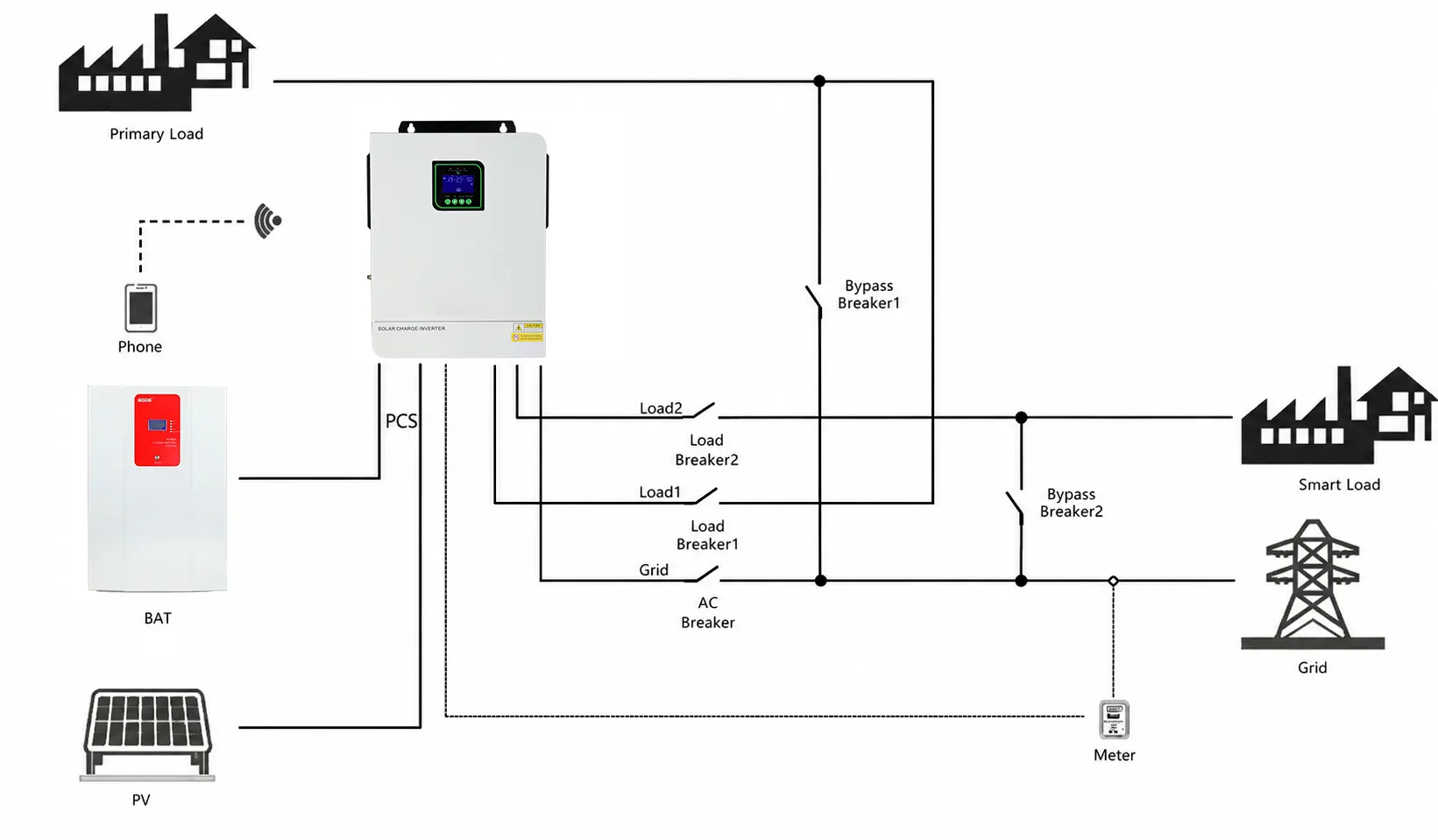
If we compare a solar power system to the human circulatory system, solar panels act like the lungs, absorbing sunlight and generating DC electricity through the photovoltaic effect, much like the lungs exchange oxygen and produce energy-rich blood.
The PV inverter functions like the “heart” of the system. It converts the DC electricity generated by the solar panels — similar to oxygen-poor blood requiring circulation — into AC electricity that can be used by the home and the grid, sustaining the entire energy flow of the system.
A DC-coupled solution can be seen as a “heart replacement surgery” for the system, replacing the existing PV inverter with a hybrid inverter that allows solar generation and battery storage to work together directly on the DC side.
The hybrid inverter mainly performs two functions:
- The hybrid inverter mainly performs two functions:
- Processing DC input from the solar panels
In a DC-coupled system, solar power and battery power are combined directly on the DC side before being converted into AC electricity for household use. Because the energy conversion path is shorter, system efficiency can reach up to 98%, making DC coupling ideal for users seeking maximum efficiency.
GODE’s THON Series hybrid inverter converts solar energy into AC power during the day to supply household loads while charging the battery system. At night, the battery powers the home independently. With system efficiency up to 98.6% and support for up to 6 units in parallel, it is well suited for both system upgrades and new residential solar projects
What Is AC Coupling?
Simply put, AC Coupling retains the existing PV equipment while adding a battery inverter, much like introducing an additional
“support circulation system” alongside the original energy system.
In an AC-coupled system, the original PV inverter, the system’s existing “heart” — continues operating normally by converting solar DC power into AC electricity for household use. Excess energy can either be exported to the grid or converted back into DC electricity through the newly added battery inverter and stored in the battery system.
At night or during grid outages, the DC electricity stored in the battery is converted back into AC power through the battery inverter and supplied to household loads.
As a result, the energy flow in an AC-coupled system typically follows this path: DC → AC → DC → AC.
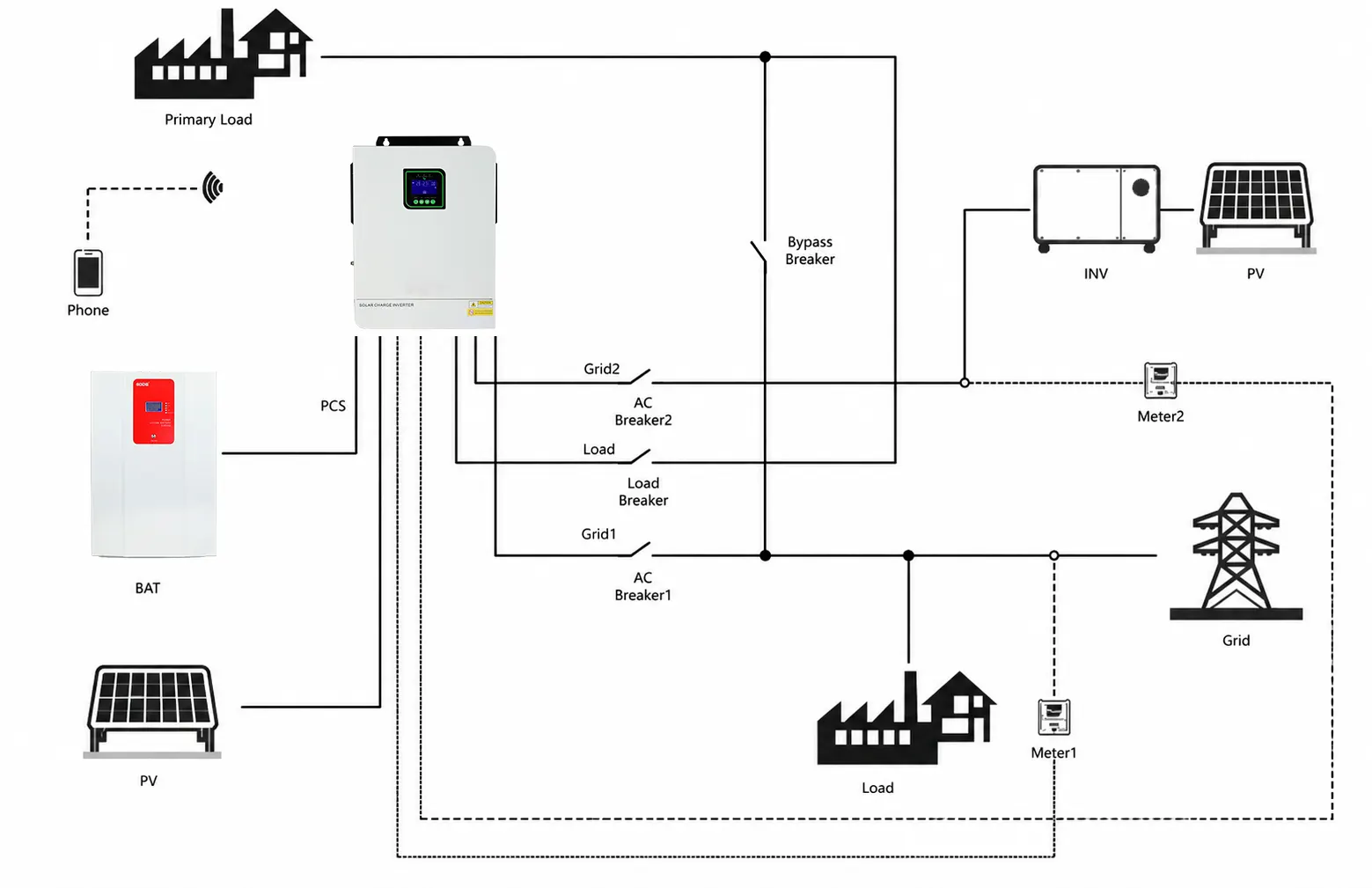
Because of the additional conversion process, the energy path is longer, and overall system efficiency is typically around 92%
–95%. However, AC coupling offers significant advantages, including maximizing the use of the existing solar system, reducing retrofit costs, and simplifying installation.
DC Coupling vs AC Coupling
When choosing between DC Coupling and AC Coupling, the differences extend beyond energy conversion paths. They also involve retrofit cost, installation complexity, space requirements, and future scalability. The following comparison helps illustrate which solution is best suited for different application scenarios.
| Key Factor | DC Coupling | AC Coupling |
| Core Modification | Replace the existing PV inverter with a hybrid inverter | Retain the existing PV inverter and add a battery inverter |
| System Efficiency | Higher(approx. 96%–98%), with a shorter energy conversion path | Moderate(approx. 92%–95%), with additional conversion losses |
| Initial Investment | Higher, requires a new hybrid inverter | Relatively lower, only additional energy storage equipment required |
| Installation Complexity | More complex, requires rewiring and system reconfiguration | Simpler, typically connected in parallel at the distribution board |
| Space Requirements | Highly integrated system with minimal space requirements | Requires additional space for installing a battery inverter |
| Impact on Existing System | Significant, requires system downtime during upgrade | Minimal, with little to no disruption to the existing system |
| Recommended For | Aging or inefficient inverter; New PV installations; High-efficiency demand; Future expansion plans | Existing PV system in good condition; Limited budget; Phased investment; Sufficient current PV capacity |
How to Choose Between DC Coupling and AC Coupling
1. Evaluate the Lifespan of Your Existing System
If your existing PV inverter is approaching the end of its design lifespan, for example, more than 10 years old — a DC-coupled upgrade may be the better choice. Replacing the inverter directly allows for a complete system upgrade while improving efficiency and long-term economic value.
If your current PV inverter is relatively new — typically five years old or less, AC coupling is often the more practical option, allowing you to maximize the value of your existing equipment while minimizing upfront investment.
2. Define Your Core Priorities
Efficiency or Cost Control?
If your priority is maximum efficiency and future expansion capability, DC coupling is generally the better choice.
If you prefer a lower-cost entry into energy storage, AC coupling is usually more suitable.
Is Fast Backup Response Important?
If power outages are frequent and fast backup response is important, DC coupling may offer greater advantages.
If outages are uncommon and the system is mainly used for daily self-consumption, both architectures can be suitable.
Are Future Expansions Planned?
If you plan to add more solar panels in the future, DC coupling offers better long-term scalability.
If your current solar capacity already meets your needs, AC coupling may be the more practical supplementary solution.
3. Consider Real Installation Conditions
If installation space is limited, DC coupling generally requires less space due to its higher level of system integration.
AC coupling, on the other hand, requires additional space for the battery inverter.
Additionally, if the existing wiring layout is disorganized, a DC-coupled upgrade provides an opportunity to redesign and optimize the system layout. If compatibility between different component brands is important, AC coupling generally offers greater flexibility.
Where the Market Is Heading
Today, AC coupling continues to dominate the retrofit market for existing solar systems. Its primary advantage lies in preserving the homeowner’s original PV investment by retaining the existing system, avoiding large-scale redesigns, inverter replacement, and rewiring. This results in lower retrofit barriers and more controllable costs.
However, market trends are evolving as technology advances and system cost structures change:
- Hybrid inverter prices continue to decline, narrowing the cost gap between integrated hybrid systems and traditional “PV inverter + battery inverter” combinations.
- Early-generation PV inverters are gradually reaching replacement age, creating natural upgrade opportunities for DC-coupled systems.
- High-voltage battery platforms are becoming increasingly common and naturally align with high-voltage DC-coupled architectures, further enhancing efficiency advantages.
More newly built residential solar-plus-storage systems are shifting toward integrated architectures, creating new growth opportunities for DC-coupled solutions.
Whether choosing DC coupling or AC coupling, the key is selecting the architecture that best matches your existing system, energy usage needs, budget planning, and future expansion goals.
Energy storage is not an impulse purchase, it is a long-term investment that requires careful planning and consideration.
share




 English
  Français
  Português
  Deutsch
  Español
  العربية
  Tiếng Việt
  Bahasa Indonesia